THE SCIENCE

What happens to your skin while you sleep.

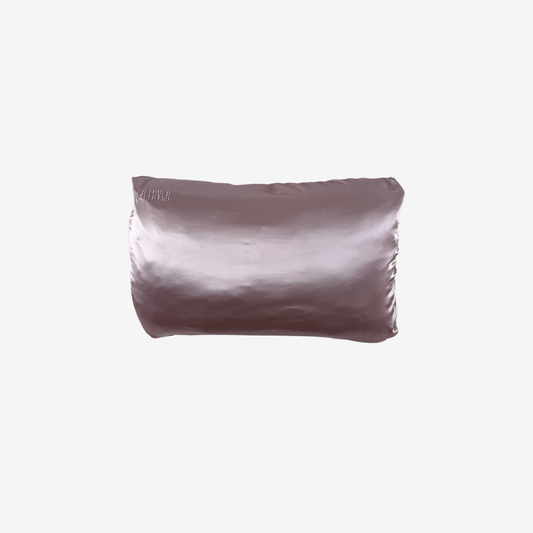
Eight hours is a long time. Your face spends every minute of it pressed against a surface - accumulating bacteria, experiencing friction, and losing moisture. The PillowWrap™ was built around a precise understanding of that biology. Here is the science behind every decision.
8
Hours of skin contact per night
Non-Rapid Eye Movement (NREM) sleep is the restorative, "quiet" phase of the sleep cycle, constituting about 75–80% of total sleep time. It consists of three stages-N1, N2, and N3 (deep sleep)-characterised by slowing brain activity, breathing, and heart rate, along with physical repairs, muscle relaxation, and immune system strengthening.
2,920
Hours per year on your pillow
More time than skin spends in sunlight or pollution - yet never part of the skincare conversation. We typically sleep on a pillowcase for 6 to 9 hours every day. Over a lifetime, this adds up to approximately 230,000 hours, or roughly one-third of our lives spent with our faces pressed directly against a pillowcase.
100
Harmful substances tested. Trusted. Safe.
Tested to OEKO-TEX® Standard 100 for over 100 harmful substances. Enhanced with SILVADUR® Silver Ion Technology for lasting freshness. Independently certified. Thoughtfully made.

Why the pillow surface matters more than you think

Your skin barrier is most permeable at night. Cortisol drops, cell regeneration peaks, and your skin enters a repair cycle that makes it both more receptive - and more vulnerable - to whatever it's in contact with.
A conventional pillowcase during this window introduces three compounding problems. The PillowWrap™ was designed to address all three simultaneously.
THE SOLUTION
Every problem has a direct material answer. SILVADUR® silver-ion technology, 22-momme Grade 6A mulberry silk, and silk's natural fibroin protein structure - working together on one sleep surface.
PROBLEM 01
Bacterial accumulation
Standard pillowcases harbour bacteria between washes. Bacterial counts can reach problematic levels within days of use - particularly relevant for acne-prone and sensitive skin.
SOLUTION 01 - SILVADUR® 930 FLEX
Silver-ion antimicrobial bonded at the fibre level
SILVADUR® bonds through the sericin protein in the silk fibre - intrinsic to the fabric, not a coating. It continuously inhibits bacterial colonisation on the sleep surface, remains active through repeated washing cycles, and is independently third-party tested.
PROBLEM 02
Mechanical friction
Cotton and synthetic fabrics create drag against skin during sleep. This repeated friction disrupts the skin barrier, contributes to sleep lines, and can accelerate visible ageing over time.
SOLUTION 02 — 22-MOMME GRADE 6A MULBERRY SILK
A protein surface that moves with skin, not against it
Silk at 22 momme has a measurably lower coefficient of friction than cotton or synthetics. Grade 6A - the highest international classification - creates a surface that allows skin to glide rather than drag, directly reducing sleep creases and mechanical stress on the skin barrier.
PROBLEM 03
Moisture absorption
Absorbent fabrics pull moisture from skin and hair throughout the night. This dehydration effect undermines the skin's natural repair processes and can leave skin looking dull by morning.
SOLUTION 03 - SILK FIBROIN PROTEIN STRUCTURE
Moisture regulated, not stripped
Silk's fibroin protein structure does not absorb moisture the way cotton does. Rather than pulling hydration away during the skin's overnight repair cycle, it regulates the microclimate at the sleep surface - so skin wakes with its natural hydration intact.
All claims verified - SILVADUR® registered technology by Dow Chemical Company · OEKO-TEX® Standard 100 certified · Grade 6A independently classified · ISO 9001 manufactured
REFERENCES & VERIFICATION
  • SILVADUR® antimicrobial technology. Registered technology, Dow Chemical Company. silvadur.com
  • OEKO-TEX® Standard 100. Independent textile testing for harmful substances. oeko-tex.com/standard100
  • Muizzuddin, N. et al. (2013). Physiological effects of a silk fabric on human skin. Journal of Cosmetic Science, 64(4), 337–347.
  • Premi, S. et al. (2015). Chemiexcitation of melanin derivatives induces DNA photoproducts long after UV exposure. Science, 347(6224), 842–847.
LATRAVLA references third-party certifications and peer-reviewed literature to substantiate material claims. This page does not constitute medical advice.
The science is built in. The story is just beginning.