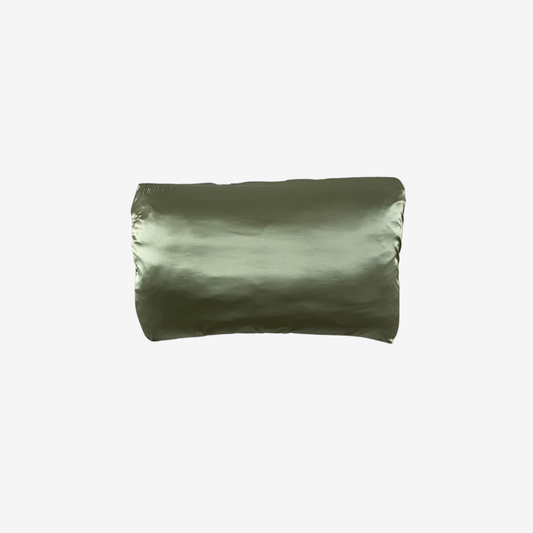
The dermatology-backed explanation for why your skin misbehaves when you sleep away from home - and the simple textile ritual that prevents it.
If your skin consistently breaks out when you travel - it’s not “just stress.”
- It’s the pillow.
- Not the look of it.
- Not the softness of it.
- The chemistry of it.
Hotel and Airbnb pillowcases are exposed to chemical detergents, high-friction fibres, bacterial load, and residue that your skin has never met before.
This guide combines dermatology insights, textile science, and clean travel practices to explain exactly what happens - and how to prevent it.
Detergent Residues = Irritation, Inflammation, Breakouts
Hotels wash linens with industrial commercial detergents, not domestic ones.
These formulas often contain:
-
synthetic fragrances
-
preservatives
-
optical brighteners
-
bleaching agents
-
softeners
-
enzymes
-
residue-producing surfactants
They’re designed for speed and cost, not skin health.
What dermatologists caution:
Fragranced detergents are one of the leading causes of contact dermatitis and irritation - especially for acne-prone or sensitive skin.
How it triggers breakouts:
-
Irritation increases inflammation
-
Inflammation triggers breakouts
-
Breakouts lead to delayed healing
- Delayed healing → hyperpigmentation
This is why many people break out even when they’ve changed nothing about their skincare routine.
Bacteria + Oils + Build-Up From Hundreds of Guests
Pillows are high-traffic objects.
Even with regular washing, residue from:
-
sweat
-
oils
-
hair products
-
skin cells
-
respiratory droplets
can remain inside pillow fibres and migrate outward.
Dermatologists often explain that “acne-prone skin is highly reactive to bacteria and occlusive build-up.”
When your cheek or jawline presses into the pillow for hours, this exposure becomes prolonged contact.
Result: clogged pores, inflammatory acne, irritation, flare-ups.
Friction Damages the Skin Barrier
High-friction materials like:
-
cotton
-
polyester
-
bamboo blends
-
cheap hotel linens
cause micro-abrasion on the skin surface.
Even if you don’t feel it, your skin does.
Why friction matters:
-
increases transepidermal water loss (TEWL)
-
triggers redness
-
exacerbates dermatitis
-
worsens rosacea
-
contributes to pigmentation in deeper skin tones
Why silk stops this:
Silk is naturally low-friction and glides against the skin, reducing mechanical irritation.
Fabric Absorbency: Cotton Steals Your Skincare
Cotton and bamboo fibres are absorbent - they pull moisture and your products out of your skin.
This disrupts:
-
barrier function
-
hydration levels
-
active ingredient penetration
-
overnight repair processes
Dermatology consensus:
Hydration is critical for skin recovery - losing it to your pillow works against this.
Silk helps retain moisture overnight without absorbing your skincare.
Airborne Allergens in Hotel Rooms
Short-term rentals and hotels contain unpredictable allergens:
-
perfumes
-
cleaning sprays
-
diffusers
-
mould spores
-
dust mites
-
pet dander (in Airbnb homes)
When allergens interact with the skin, especially the cheeks and jawline, inflammation and breakouts spike dramatically.
This explains:
-
holiday acne
-
cheek clusters
-
jawline congestion
-
random irritation patches
The Silk + Silver Solution for Travel Skin
A clean, hypoallergenic barrier prevents exposure to:
-
residues
-
friction
-
allergens
-
bacteria
Why the LATRAVLA PillowWrap™ works:
-
Pure 22-Momme Mulberry silk
-
Low-friction
-
Breathable
-
OEKO-TEX® certified dyes
-
Silver nanoparticle infusion for antibacterial support
-
Fits any hotel pillow in seconds
It gives your skin one consistent surface - everywhere you go.
Your skin doesn’t break out on holiday because of “stress.”
It breaks out because the material, chemistry, and microbiome of hotel bedding are completely foreign to your skin.
You can’t control hotel detergents.
But you can control what touches your face.
Clean sleep = clean skin.